Automation level:semi-automatic
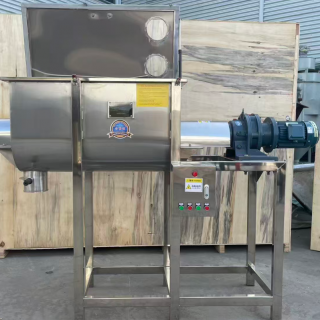
Key equipment:dough mixer
country of origin:Henan, China
Weight (KG):10000
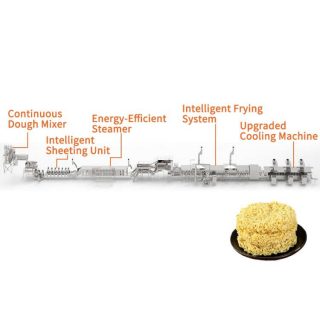
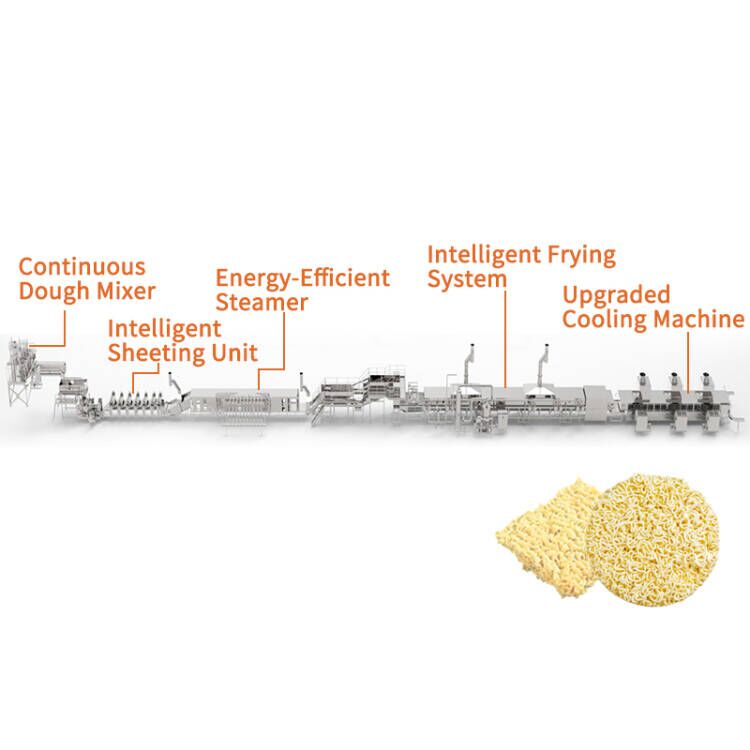
Instant noodles, due to their convenience, affordability, and diverse flavors, have become an important part of the global diet. Among the many categories, fried and non-fried instant noodles are the two main types, with the fundamental difference lying in their drying processes, which in turn affect nutritional components, sensory characteristics, and production costs. The core production processes of both (dough mixing, kneading, compounding, rolling, shredding, and steaming) are highly consistent; the real divergence occurs in the final drying stage: fried noodles are dehydrated through frying, while non-fried noodles are dried using hot air. This technological difference leads to significant variations in oil content, flavor, and equipment investment
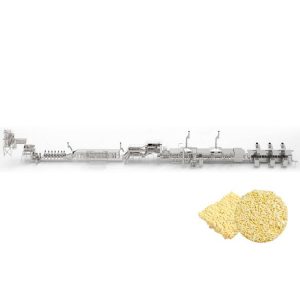
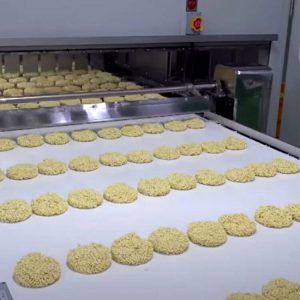
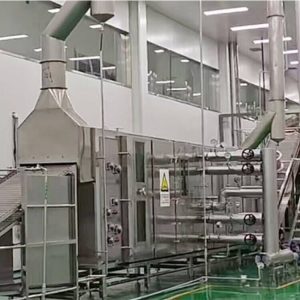
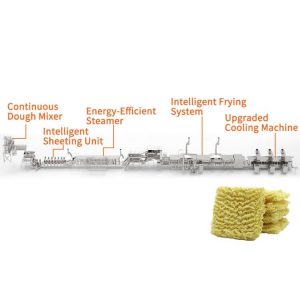
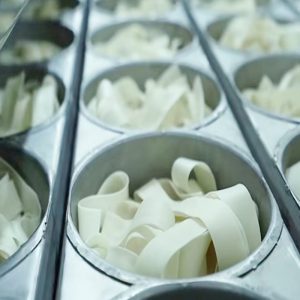
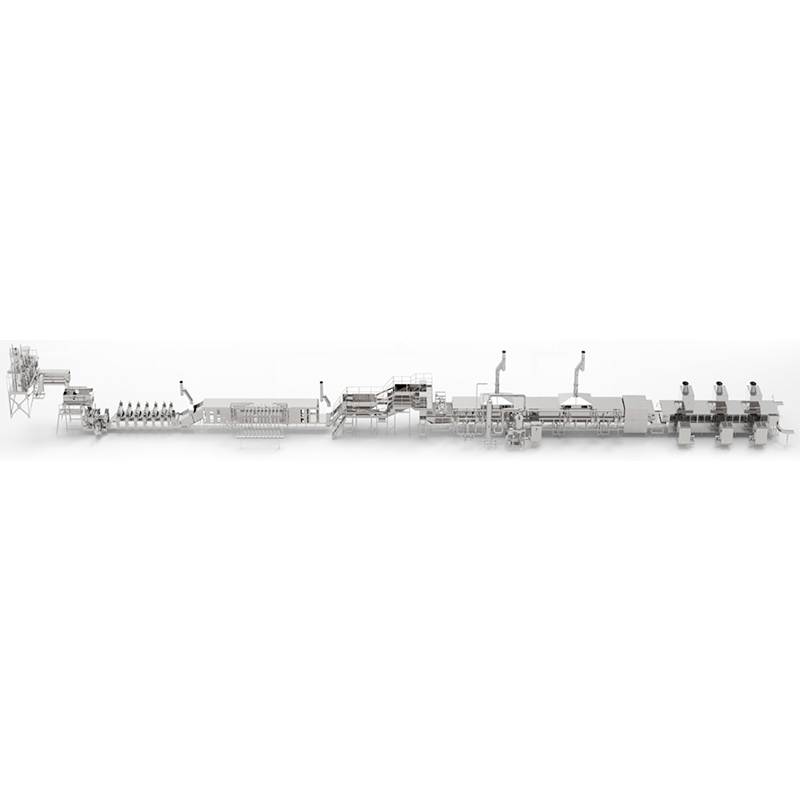
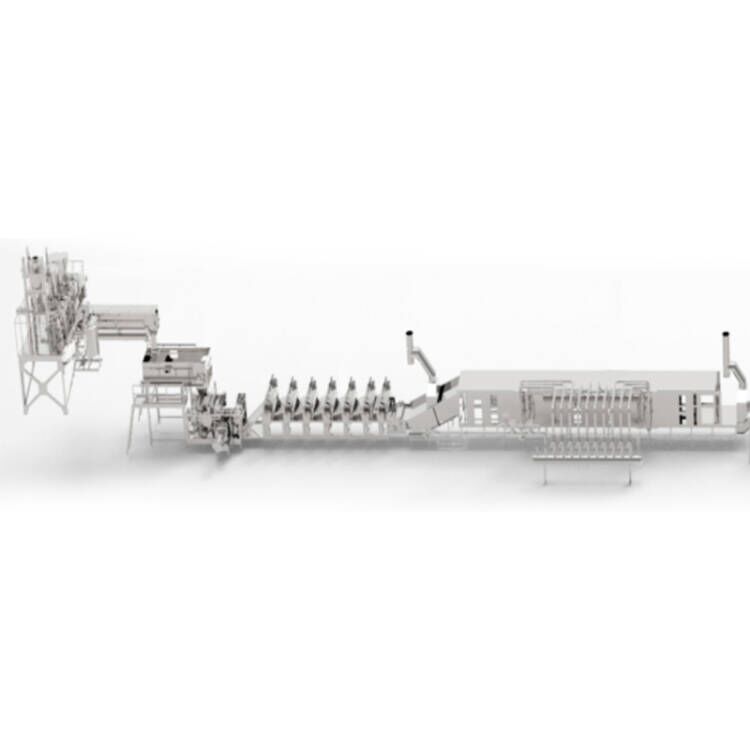
A production process and equipment for non-fried instant noodles, comprising the following steps: flour – sieving – mixing – refining – maturation – forming – steaming – arranging – cutting – drying – packaging. Forming utilizes extrusion molding, steaming utilizes microwave steaming, and drying utilizes heat pump low-temperature, low-humidity, rapid drying technology. Extrusion, microwave, and heat pump processes are connected in series. The production equipment includes: a metering pump, a premixing tank, a variable-pitch extruder, a microwave pipeline, a noodle arranging machine, a cutter, a conveyor belt, a heat pump dryer, a sealing mechanism, and a computer control system. By using the above production process and equipment, combining extrusion molding, microwave steaming, and heat pump drying in series, the nutritional components of the noodles are well preserved, and excellent gelatinization and micro-expansion properties (resulting in high gluten content and rehydration rate, and full automation) are achieved, resulting in extremely high productivity and low production costs.